• Skip to main content
  • Skip to primary sidebar
  • Skip to footer

Open to the Journey

  • Home
  • About
    • Testimonials
  • Personal Wellness
  • Clinical Training
    • Integrative Imagery
    • Mari / Mandala
    • Guided Imagery & Music
    • Clinical Training Events
  • Events
    • Personal Wellness Events
    • Clinical Training Events
  • Resources
    • Blog
    • Links
    • Podcasts
    • Books
  • Counseling
    • Cara Marinucci
    • Erin Johnson
  • Contact

Open to the Journey Blog

Meet the Founders of Open 2 The Journey

Erin and Cara stand together outside under a tree and smile at the camera

We’ve shared the story of how we met more times than we can count, and it still feels meaningful each time. Starting our business together wasn’t easy, but the journey has shaped us in profound ways. It’s touched the lives of our clients, supported the practitioners we’ve had the honor to train, and transformed us personally as well. We definitely make a great team as we bring together our shared values and complementary strengths.

One Presentation Started It All

One day when Cara was working at a local community mental health agency, the opportunity presented itself to attend a short presentation on Guided Imagery and Music (GIM). During the workshop Erin played various pieces of music and asked people to listen deeply and then share what came up for them. Cara was blown away by the presentation. On an impulse, as she was closing the presentation Erin offered a free GIM session to the first three people who contacted her. Cara immediately came up with her calendar and went on to complete GIM training and eventually also became a trainer. All thanks to that GIM session Erin offered on the spot that one momentous day!

The Evolution of Open 2 the Journey

We started back in 2008 as Integrative Music Institute when we began teaching GIM together. As we expanded our creative and healing offerings, our name has shifted and grown right alongside us. The next evolution was Integrative Transformations which better reflected the full scope of counseling, training, and personal workshops that we offered at the time. And then, a few years ago the name Open 2 the Journey came to us in an imagery and visioning session. We appreciate the journey we have had together and it feels important to also share the individual paths that brought us here.

Individual Journeys, Shared Vision

Erin’s journey into the counseling profession began with both determination and a touch of serendipity. Growing up in a working-class family in Ft. Lauderdale, she became the first in her family to attend college. She started at her local community college where a simple notice on a student message board changed the course of her life: an invitation to volunteer in a peer counselor training program. She then transferred to the University of Florida, where she earned her B.A. in Psychology. With this newfound sense of direction, Erin pursued her M.Ed. in Counseling at the University of Virginia in Charlottesville. There, she immersed herself in a year-long internship providing home-based counseling for at-risk youth and families. Stepping into the homes of families facing profoundly difficult circumstances, she felt humbled and honored by their trust. This experience not only deepened her compassion but also affirmed her calling to the work she continues today.

Cara’s path was influenced by growing up in a family that moved several times, which gave her the chance to experience three very different public school settings — a large city in the North, a mid-size beach town in the South, and a rural community in the Midwest. These early experiences sparked her natural curiosity about people and their lives which initially led to a focus on teaching while pursuing her B.A. in Physical Education and Secondary Education Biology at Marietta College. Teaching and coaching are what led her to graduate school at Shippensburg University. She started out focused on a College Student Administration track while balancing an internship in the athletic department. However, the introductory counseling classes profoundly expanded her perspective, so much so that she shifted her focus to College Counseling.

As you can see each of our paths into counseling were shaped by different experiences, yet what draws us to the profession unites us in a shared vision. Cara’s dedication to exploring diverse counseling perspectives and Erin’s deep honor in being invited into people’s lives both reflect a commitment to healing, growth, and transformation. Together, we bring ourselves as the primary instrument of change, creating a joint sense of purpose that guides our work as a team.

Guiding the Journey: Our Counseling Approach

In our work at Open 2 the Journey, we believe it’s essential that those seeking counseling feel confident in the training and integrity of their providers. We are both Licensed Professional Counselors through the Virginia Board of Counseling, and Erin also holds a license as a Marriage and Family Therapist. Beyond our clinical work, we are dedicated teachers and trainers: both of us are Fellows and Primary Trainers with the Association for Music and Imagery, MARI (Mandala Assessment Research Instrument) Certified Practitioners and Teachers, and Certified EMDR Clinicians (EMDR-C) through Evergreen Certifications.

In our individual counseling practices, we bring together a wide range of approaches to meet the unique needs of each client, including:

  • Guided Imagery and Music & Integrative Imagery
  • EMDR & Parts work
  • Mindfulness & somatically based approaches
  • Experiential & expressive arts 
  • MARI & Drawn Mandala
  • Solution Focused & Cognitive Behavioral therapies
  • Coaching to support wellness, creativity, and spirituality

Centering the therapeutic relationship as the heart of the healing process, we value each person just as they are and offer a safe space for healing, growth, and transformation. We see counseling as an evolving journey of becoming, one we are honored to walk alongside our clients.

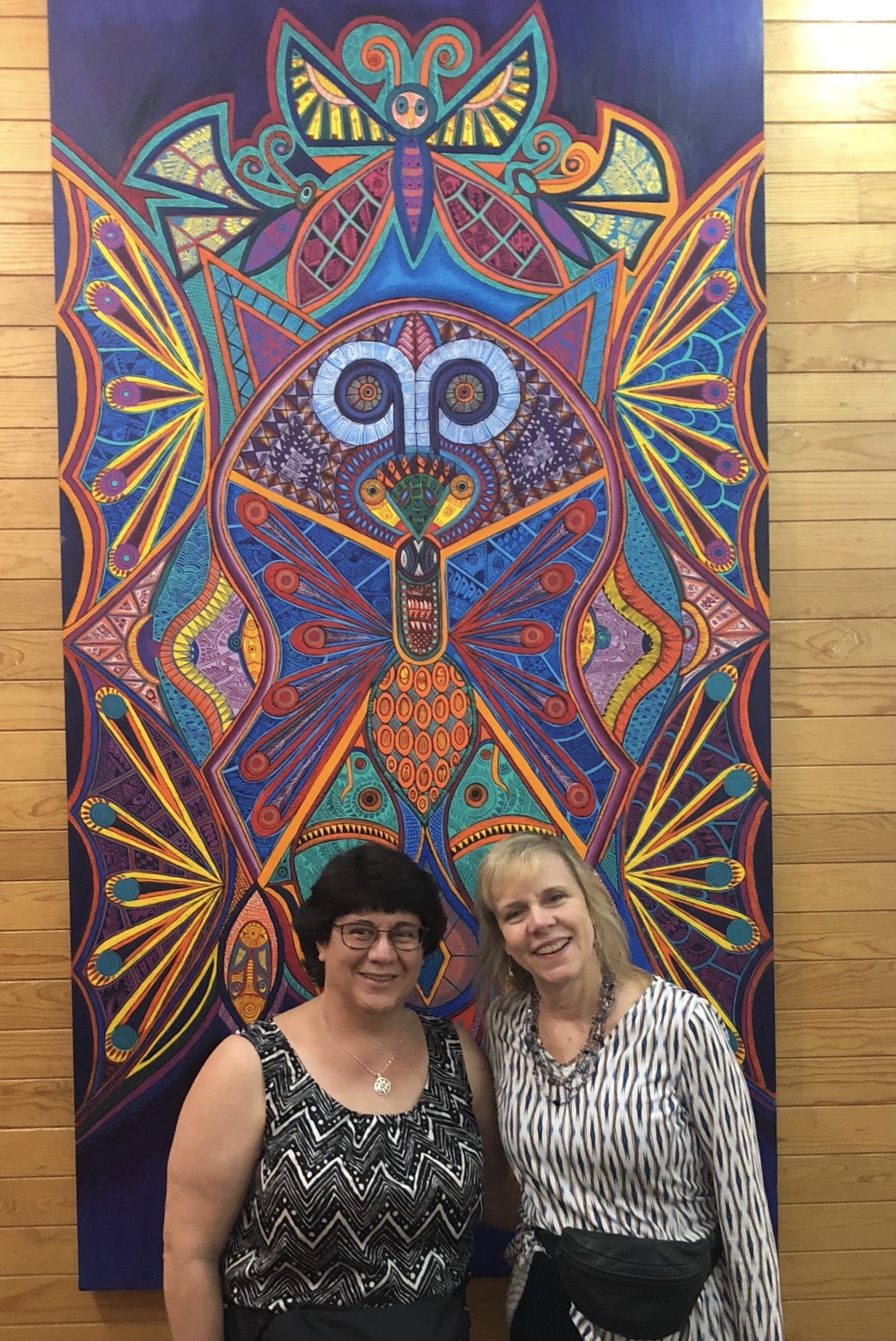
Cara and Erin pose together in front of a large colorful painting while at a wellness event in Mexico
Cara and Erin while in Mexico.

The Heart Behind Our Personal Wellness Offerings & Clinical Trainings

At the core of our work is a simple but powerful desire: to share the kinds of meaningful experiences that have deeply shaped our own lives. Over the years, we’ve been fortunate to participate in transformative journeys — from spiritual retreats in Mexico and hikes through the wild beauty of Cape Breton, Nova Scotia, to meditation immersions and spiritual women’s circles devoted to ongoing inner exploration. These experiences have nourished us, inspired us, and expanded our sense of what’s possible. Naturally, they also fuel our wish to create and offer spaces like these for others.

We’re passionate about providing both personal wellness workshops and clinical training. Designing new offerings and reimagining those we’ve led before keeps our work vibrant and alive. And participants often say they value our balance of humor, lightness, depth, and sacredness. One consistent piece of feedback we receive is how needed these spaces are — places where people can spend a few hours, a day, or a weekend in a supportive, engaging environment. Here, you can explore creativity, deepen your relationship with yourself, and do so in the company of others on a similar path. 

What makes our gatherings unique is, quite honestly, us — the way we hold space, the way we guide, and the way we bring people together. We know that the best way to understand what we offer is to experience it firsthand: to join a circle, step into a workshop, and feel what unfolds when intention, community, and curiosity meet.

Our clinical training offerings are also evolving as we become more intentional about where and how we devote our energy. We find deep joy and inspiration in our ongoing conversations about creating workshops, teaching, training, and presenting – including our 2024 Psychotherapy Networker Symposium presentation “The Healing Power of Guided Imagery.” This focused on how therapists can use the Integrative Imagery framework to weave imagery techniques into their existing approaches. 

Join Our Personal Wellness Events & Clinical Training

If you have any questions about our offerings, feel free to contact us.

  • See All Our Upcoming Clinical Training Events
  • See All Our Upcoming Personal Wellness Events

Discover More Resources:

  • Nature Mandalas as a Wellness Experience
  • Mandalas For Mindfulness and Gratitude

Drawn Mandalas & MARI for Exploring Your Subconscious

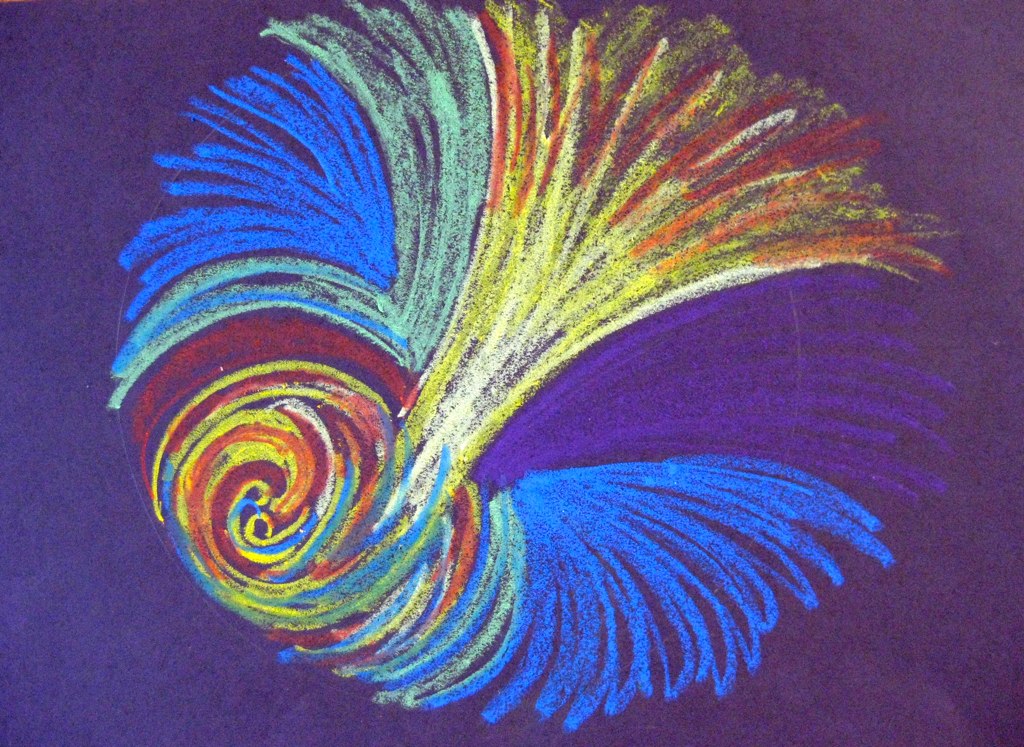
Mandala drawn with blue, yellow and orange colored pencil and pastel on dark blue paper

Open 2 the Journey offers clinical training for therapists as well as facilitating personal wellness workshops and events for people seeking transformative self-discovery. As licensed professional counselors, Cara Marinucci and Erin Johnson facilitate events, retreats, and more through their work by using Integrative Imagery, Guided Imagery & Music, and the Mandala Assessment Research Instrument (MARI) and Drawn Mandalas.  Their focus on helping others connect with their own inner guidance is deeply supported by the MARI and drawn mandala, which are rooted in spiritual traditions and continue to be developed and researched within Western medicine and psychology.

Mandala Origins in Buddhism and Hinduism

Mandalas are historically tied to Buddhism and Hinduism, with significant spiritual traditions and practices held by both religions. Often drawn as a spiritual guidance tool, it is this history that influenced Carl Jung bringing mandalas into therapeutic work as a way to connect with the subconscious. Today, mandalas are integrated into psychotherapy or spiritual practice as well as being created by artists.

In Hinduism, mandalas are called yantras and typically take the form of four squares with a circle at the center and four gates at the north, east, south, and west points of the outer circle. In practice, yantras are used as symbols of truth and instructional charts for guidance. How mandalas in Hinduism differ from that of Buddhism is the material — in Hinduism, rice, colored powders, and flowers are used. Whereas in Buddhism, mandalas are often constructed with sand.

It is believed that Buddha taught the sand mandala construction in India from the fifth century B.C.E forward. Beautifully, this art’s teachings and knowledge have been passed down from generation to generation for over 2,500 years, without the tradition being broken. Each intricate detail of a mandala has symbolic meaning in Tibetan Buddhism, and the creative process is believed to gather and distribute spiritual energy as an offering to the universe.

The Evolution of Mandalas

In Tibetan Buddhism, mandala painters — with a long family history of working this sacred occupation — focused their work around religion, even undergoing initiation rites to be able to paint mandalas. The thoughtful care put into the process of creating such mandalas has significantly influenced how modern-day artists approach mandala art.

Take for instance self-taught artist Jamie Locke. She is known for her hand-carved mandalas on materials like wood, metal, glass, and leather. “For me, the process of creating a mandala is always one of inspired revelation, elemental surprise, and pure bliss,” says Jamie. (Source) 

And then there’s Tibetan mandala artist, Tenzing Rigdol. Tenzing is often commissioned by museums and others to paint mandalas with tantra principles of ignorance, nature of self, and human interdependence at the foundation of his work. Most recently, he painted an installation, “Biography of a Thought,” for the Mandalas: Mapping the Buddhist Art of Tibet exhibition at The Metropolitan Museum of Art.

YouTube: Meet the Artist—Tenzing Rigdol Commission-Mandalas | Met Exhibitions

By observing how artists create mandalas, we gain insight into their subconscious minds. From surface preparation and sketch transfers to painting, shading, and final details, the process reveals why mandala-making is a deeply spiritual practice — for both the artist and those who experience it. Sand mandalas, too, embody this same spiritual depth, fostering meditation, focus, and reflection.

There are also free online resources for mandala coloring pages that can be downloaded and printed for use as a meditative or relaxing activity that promotes inner calm. At Open 2 the Journey, mandalas are used in  therapy with clients to help them uncover unconscious issues and their personal strengths. We also bring in the MARI — which is the use of symbols and colors displayed on the Great Round to reveal a visual picture of a client’s psyche. MARI was influenced by the mandala drawing work of Carl Gustav Jung. Jung believed that drawn mandalas integrate psychological division, enhance psychological harmony, and preserve personality integrity.

What is MARI?

More deeply defined, MARI is a holistic assessment instrument that uses 39 symbol cards and 45 color cards. It was created by Joan Kellogg, an art therapist and researcher who wanted to gain more insights into her client’s psychological, career, relational, and physical issues. According to Joan, “The symbol cards are displayed first — in random order. The person is asked to choose six symbol cards they like or are most attracted to, one symbol card they are least attracted to and sometimes guidance cards for a particular issue. They are then asked to choose colors that ‘go with’ the symbols they picked. The choices of symbols and colors is intuitive.”(Source)

MARI and Drawn Mandala are actively used by mental health practitioners, life coaches, and art and music therapists, dating back to the 1970s. Kellogg developed MARI at the University of Maryland (UMD) when well-known therapists (Stanislav Grof, Helen Bonny, Walter Pahnke) were conducting pioneering consciousness research with psychedelics. 

Working with Drawn Mandalas for 25+ years, Kellogg created a system that brought more objectivity to the interpretation of mandalas when used in art therapy. She recognized that the symbols and colors were associated with specific stages of life — beginnings, struggle, and full consciousness, in the human mind. Both Jung and Kellogg acknowledged that symbols have existed in our collective consciousness and unconscious psyches for millions of years. Today, the MARI offers both a Jungian and Transpersonal psychology approach that includes all four functions of consciousness — intuiting, thinking, feeling, and sensing.

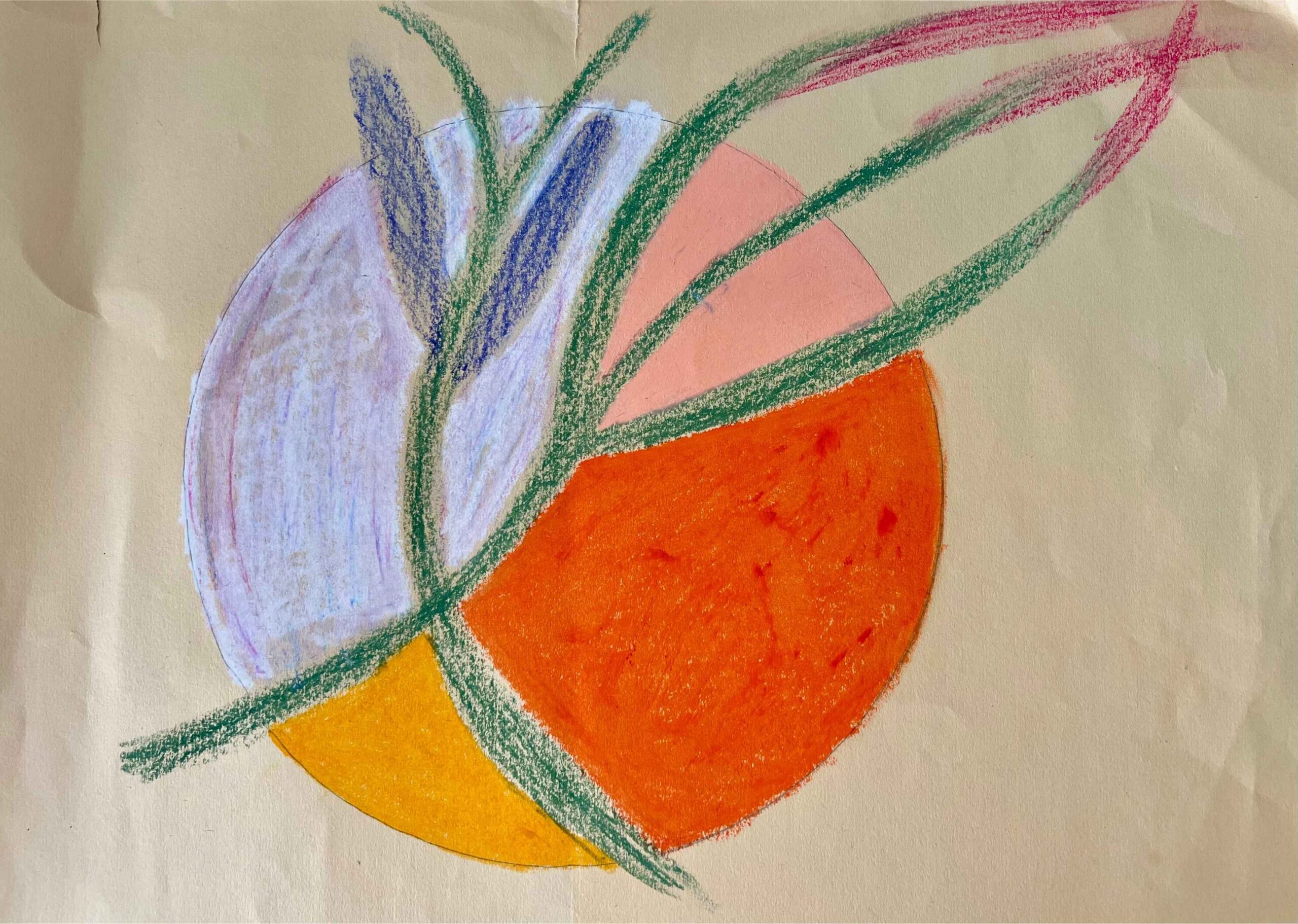
Mandala colored pencil drawing on cream paper shows two branches with leaves crossed and placed over a circle. The circle has been colored in sections with lavender, peach, orange, and yellow.

The Four Functions in Mandala Drawing and MARI

According to Jung, the four functions of consciousness — intuition, thinking, feeling, and sensing — are deeply interwoven and rarely operate in isolation. Each becomes active in unique ways during the mandala drawing process, as seen in the MARI approach.

The intuitive function is central from the beginning. When a person engages with symbols, colors, and spontaneous creative choices, they tap into unconscious material that rises through inner images and impulses. The act of selecting colors, choosing a starting point, and moving within the circle opens a channel for intuition to guide the experience without rational interference.

The thinking function comes into play when the individual begins to reflect on their choices. As symbols and images emerge, meaning-making begins. This function seeks to analyze, categorize, and connect the symbolic content to life experiences or present issues. It helps bring structure and clarity to the material that surfaces.

The feeling function becomes engaged as the individual explores the emotional resonance of their mandala. Rather than analyzing, this function assesses value and emotional tone — what feels significant, heavy, joyful, or unsettling. The emotional responses to colors, shapes, and symbols provide vital insight into the person’s inner state.

The sensing function is activated through direct, sensory experience. The physical act of drawing, the texture of the pastels, the contrast of colors, and the visual impact of the finished mandala all ground the process in the present moment. This function provides access to embodied awareness and connects symbolic content to felt reality.

Together, these four functions allow for a holistic encounter with the unconscious. Through the MARI process, the mandala becomes not just an image, but a living reflection of the individual’s internal world — complex, layered, and deeply human.

Join Us & Become a MARI Practitioner

MARI is highly recommended for mental health professionals, including art therapists, music therapists, psychotherapists, and master-level wellness coaches. 

Those interested can take a course through Open 2 the Journey. 

In our 20-hour MARI training you will learn and experience how to use MARI to assess personal, career, relationship, health, and spiritual issues with your clients. The training covers the significance of symbols and images that are typically encountered in drawn mandalas, how as a practitioner, you practice providing effective, ethical, and strength-based assessments with your clients, and how to incorporate mandala work with individuals and groups.

In addition, we also dive deeper into:

  • Clinical applications of the assessment tool
  • Supervision of practice sessions
  • Case studies
  • Professional ethics

We are teachers through MARI Creative Resources and have successfully guided many in becoming official MARI Practitioners.

LEARN MORE & REGISTER

We also facilitate personal workshops and retreats that bring drawn mandalas into the process of self-discovery, expression, healing, and growth.

  • See All Our Upcoming Clinical Training Events
  • See All Our Upcoming Personal Wellness Events
  • Nature Mandalas as a Wellness Experience
  • Mandalas For Mindfulness and Gratitude

Integrative Imagery & Guided Imagery and Music: Pathways of Inner Vision

person meditating on a dock

As a practice offering holistic clinical training events and wellness events for clinicians and folks on a self-discovery journey, we know that each clinical modality offers its own unique benefits.

After years of experience within the field, we have developed our own approach to help therapists better understand how to bring imagery into sessions with clients — Integrative Imagery. This practice seeks to help our clients with self-regulation, healing, processing, and so much more.

While influenced by the work of many other renowned therapists in the practice of Guided Imagery and Music (GIM), our distinct approach dives deeper into how imagery can influence your practice and offer up various pathways to vision and self-discovery for your clients.

What is Imagery?

On an expansive level, imagery is a fundamental part of the human experience. It allows us to perceive, sense, and intuitively understand the world beyond simple visual representations. Imagery arises spontaneously, or intentionally, and most often carries emotional depth and personal significance for individuals. It can manifest through memories, bodily sensations, intuitive impressions, or even symbolic figures —regardless of how imagery forms it can help bridge unconscious and conscious experiences for your clients.

[Read more…] about Integrative Imagery & Guided Imagery and Music: Pathways of Inner Vision

Primary Sidebar

Upcoming Personal Wellness Events

  • Unconditional Presence of Sound: Compassion
    Unconditional Presence of Sound: Compassion
    23 Feb 26
    Zoom Online
  • Unconditional Presence of Sound: Renewal
    Unconditional Presence of Sound: Renewal
    27 Apr 26
    Zoom Online

Upcoming Clinical Training Events

Pre-Registration for MARI & Drawn Mandala Training Winter 2026
30 Jan 26
Zoom Online

Latest Blog Posts…

Meet the Founders of Open 2 The Journey

Drawn Mandalas & MARI for Exploring Your Subconscious

Integrative Imagery & Guided Imagery and Music: Pathways of Inner Vision

Footer

Open 2 the Journey

Quick Links

  • Personal Wellness Events
  • Clinical Training Events
  • Open to the Journey Blog
  • Testimonials
  • Terms of Service
  • Privacy Policy

Erin Johnson, LPC

Cara Marinucci, LPC

Connect with us

  • Email
  • Facebook
  • Instagram
  • LinkedIn
  • RSS

Personal Wellness, Clinical Training, and Counseling in Charlottesville, Virginia
Copyright © 2025 Open to the Journey, Charlottesville, VA.